
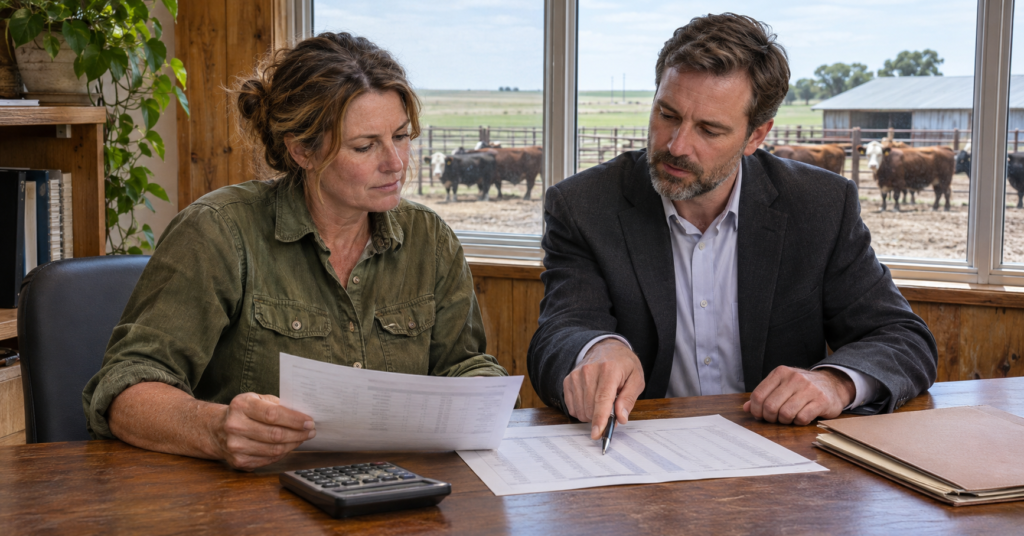
A Nebraska farm divorce can become complicated when cattle leave the property before either spouse has a reliable inventory. One person may see an ordinary sale of market-ready calves. The other may discover a smaller herd without knowing where the money went.
The sale price alone rarely explains the transaction. Auction charges, operating loans, replacement animals, and unpaid expenses can affect what remains available for division. The records must connect those details.
For separating farm and ranch families, the practical goal is to establish what was owned, what changed, and how the resulting value should be treated.
A Livestock Sale Changes More Than the Head Count
Selling animals converts livestock into another form of value. That value might become cash, reduce a loan, or purchase replacement breeding stock. A smaller herd therefore does not necessarily mean that marital property has disappeared.
Consider a simplified example. Cattle sell for $60,000, selling expenses consume $2,000, and $40,000 pays down an operating loan. The remaining cash is $18,000, but the transaction also reduced debt.
A divorce review should examine all those movements. It should also establish whose loan was paid and whether the debt belongs in the marital accounting. A bank deposit viewed alone cannot answer those questions.
Establish Which Livestock Interests Are Marital
Nebraska’s property-division statute calls for equitable distribution of marital assets. Classification comes before deciding how much each spouse receives: the court must distinguish marital interests from property that should be treated separately.
A Changing Herd Can Still Have a Premarital Component
In Sellers v. Sellers, the Nebraska Supreme Court discussed treating a cattle herd as a continuing asset for tracing purposes, rather than requiring the same individual animals to survive throughout the marriage. The decision also explains that the spouse claiming nonmarital property bears the burden of proving that classification.
Older purchase records, premarital balance sheets, inheritance documents, and evidence of reinvestment may therefore matter. Their relevance extends beyond identifying the animals standing in a pen today.
A premarital herd does not automatically make every later animal or increase in value separate. Contributions, financing, tracing, and the particular evidence still require analysis.
Reconstruct Each Sale From Inventory to Payment
Build a transaction record that allows someone unfamiliar with the operation to follow the animals and the money.
Start with the inventory before the disputed sale. Separate calves, replacement heifers, breeding cows, and bulls. Record purchases, births, deaths, and transfers during the relevant period so ordinary herd changes are not mistaken for unexplained losses.
Then connect the sale documents to the financial records.
| Record | What it helps establish |
|---|---|
| Auction settlement or private sale agreement | Animals sold, sale date, gross price, and deductions |
| Bill of sale or applicable ownership documentation | Seller, buyer, and evidence supporting the transfer |
| Bank statement and deposited check | Amount received and destination account |
| Loan statement | Debt balance before and after payment |
| Replacement purchase invoice | Whether proceeds bought other livestock |
Nebraska’s livestock ownership-documentation statute requires written sale documentation or specified alternatives for cattle. These records can help reconstruct a transfer, although they do not independently decide marital ownership.
Explain the Difference Between Gross and Net Proceeds
If the auction statement and bank deposit differ, identify the reason. Commissions, transportation, and payments made directly to a lender may explain the gap.
A claimed deduction should be supported where possible. An unexplained statement that the money “went back into the farm” leaves important accounting questions unanswered.
Coordinate Valuation Dates With the Sales Timeline
Livestock values and operating debt can change substantially during a divorce. Comparing an old herd inventory with a current loan balance can produce a misleading picture.
Nebraska does not require one valuation date for every marital asset and debt. The Legislature’s annotations to section 42-365 explain that the chosen date must rationally relate to the property being valued.
For each proposed valuation date, identify the livestock then owned, any unpaid sale proceeds, relevant cash, and associated debt. Explain transactions occurring between that date and later financial statements.
The accounting should also guard against counting the same economic value twice—for example, listing cattle as still owned while separately including the cash received from selling them.
An agricultural valuation professional can help distinguish changes caused by animal numbers, weight, condition, and market prices.
Distinguish Ordinary Operations From Dissipation
Farms need money for feed, veterinary treatment, labor, and financing. A sale during separation is not automatically improper simply because one spouse objects to it.
Dissipation concerns a different issue: using marital property for a personal purpose unrelated to the marriage while the relationship is irretrievably breaking down. Nebraska appellate decisions recognize that proven dissipation may be addressed by including the dissipated value in the marital estate. The spouse alleging it initially must produce persuasive evidence.
Warning signs worth investigating include an unusual transfer to a relative, an unexplained discount, or proceeds diverted to personal spending. None proves misconduct by itself.
Compare the transaction with previous selling patterns, contemporary market information, invoices, and the actual destination of the funds. Specific evidence is more useful than assuming every reduction in livestock numbers was intended to defeat a divorce claim.
Temporary Orders Require Careful Review
After a divorce complaint is filed, Nebraska Revised Statute 42-357 allows a court, upon an appropriate application and supporting affidavit, to issue orders restricting property transfers or concealment. The statute includes exceptions for the usual course of business and necessities of life.
This provision does not automatically freeze every farm transaction when someone files for divorce. The wording, service, duration, and later modification of an actual order matter.
Ex parte property orders under that provision last no more than ten days or until a hearing, whichever occurs earlier. A lawyer should address the next procedural step rather than treating an initial order as permanent.
Make Ongoing Farm Operations Clear
Where continued sales are necessary, ask counsel whether an agreement or order should address advance notice, supporting records, permitted expenses, and where net proceeds will be held.
Clear instructions can reduce conflict while allowing animals to receive necessary care. Neither spouse should assume that calling a transaction “normal business” conclusively resolves whether it complies with an order.
When to Contact a Lawyer
Contact a Nebraska family lawyer promptly if a substantial sale is approaching, records are being withheld, or livestock may be transferred outside the operation.
Look for experience with agricultural assets, operating loans, business ownership, and nonmarital tracing. A farm accountant or valuation specialist may also be needed.
Bring available inventories, recent balance sheets, sale records, loan documents, and existing court orders. Identify missing information without trying to obtain it through unauthorized access to another person’s accounts.
Our guide to questions to ask before hiring a divorce lawyer can help you assess experience, communication, and likely costs.
Frequently Asked Questions
Does a Nebraska divorce filing automatically prevent cattle sales?
No. Filing alone does not create the property restraint described in section 42-357. Any applicable court order must be reviewed, including its exceptions and duration. Other ownership or financing restrictions may also affect a sale.
Are sale proceeds separate property if deposited into one spouse’s account?
The account name alone does not determine classification. The source of the livestock interest, tracing evidence, and subsequent use of the money require review.
Can cattle inherited before the divorce still create disputed marital value?
Yes. Inherited property may be separate, but disputes can arise over later contributions, reinvestment, mixing of funds, or increases in value. The outcome depends on the evidence and applicable Nebraska law.
Note: This article provides general information about Nebraska divorce and livestock accounting, not legal advice. Consult a licensed Nebraska attorney about property classification, court orders, and the facts of your case.