
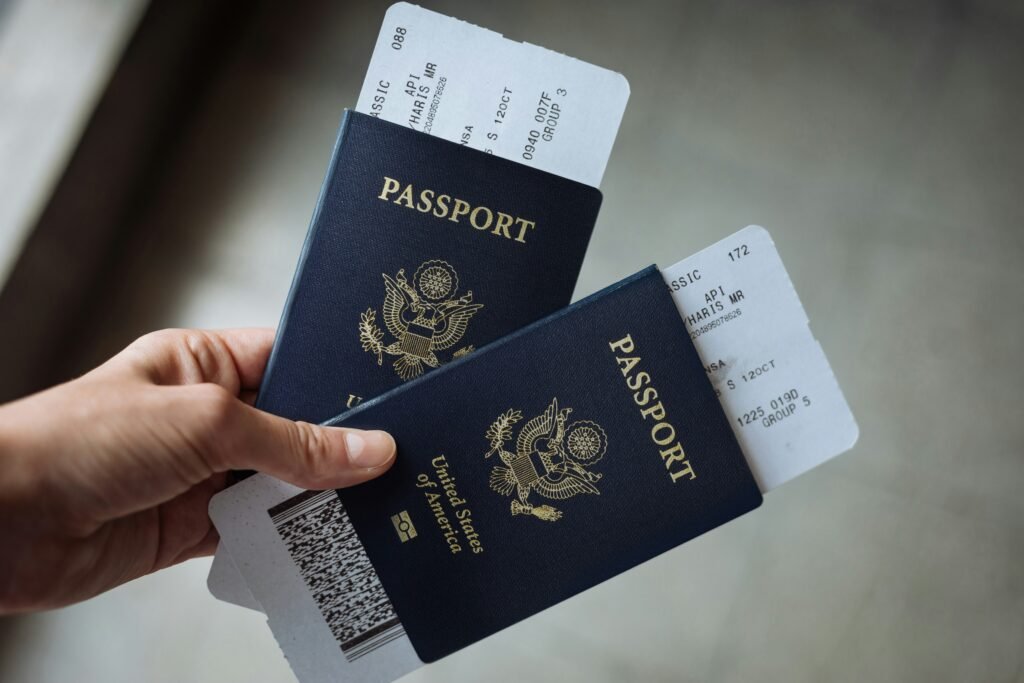
An old visa refusal may affect an ESTA application even when the traveler now has a new passport or citizenship from a Visa Waiver Program country. The official ESTA application asks about U.S. visa refusals involving both current and previous passports.
Obtaining a new passport does not erase a person’s immigration history. A previous refusal does not necessarily mean that ESTA will always be denied, but the traveler must answer the application accurately and allow U.S. Customs and Border Protection to determine eligibility.
What Is ESTA?
The Electronic System for Travel Authorization, commonly called ESTA, is an automated system used to determine whether a traveler may board transportation to the United States under the Visa Waiver Program.
The program allows eligible citizens and nationals of participating countries to travel to the United States for qualifying business or tourism visits of up to 90 days without first obtaining a visitor visa.
ESTA is not a visa. It is also not a guarantee of admission. An approved authorization generally allows the traveler to request entry under the Visa Waiver Program, but a Customs and Border Protection officer makes the final admission decision at the port of entry.
The U.S. Department of State’s Visa Waiver Program guidance explains the program’s general travel and passport requirements.
Must You Disclose a Visa Refusal From an Old Passport?
Yes. The official ESTA application asks whether the applicant has ever been denied a U.S. visa applied for using a current or previous passport. It also asks about previous refusals of admission and withdrawals of applications for admission at a U.S. port of entry.
The question is not limited to:
- The passport currently being used
- Refusals within a particular number of years
- Refusals connected to the traveler’s current citizenship
- A particular type of U.S. visa
- Refusals that remain stamped inside the passport
A traveler who was refused a U.S. visa under a former nationality or passport should not answer “no” merely because the document has expired or been replaced.
Does a New Passport Erase a Visa Refusal?
No. A new passport does not create a new immigration identity or remove previous dealings with U.S. immigration authorities.
U.S. government records may connect a person’s immigration history through information such as:
- Full name
- Former names
- Date and place of birth
- Previous citizenship
- Passport numbers
- Visa applications
- Biographic information
- Photographs
- Fingerprints
- Prior travel records
- Refusals at consulates or ports of entry
The lack of a refusal stamp in the new passport does not mean that the government has no record of the earlier application.
A traveler should answer the ESTA questions based on their complete history rather than only what appears in the current passport.
What If You Acquired Citizenship in a Visa Waiver Country?
A person may become eligible to apply for ESTA after acquiring citizenship in a country participating in the Visa Waiver Program. However, the new citizenship does not remove the obligation to disclose a previous U.S. visa refusal.
Consider someone who:
- Applied for a B-1/B-2 visa using a passport from a country outside the Visa Waiver Program;
- Was refused the visa;
- Later became a citizen of the United Kingdom or another participating country; and
- Obtained a new biometric passport.
The person may now satisfy the nationality requirement for applying through ESTA. Nevertheless, the old visa refusal remains part of the applicant’s history and must be disclosed when the application asks about it.
Eligibility to submit an ESTA application and approval of that application are separate questions.
Does Every Previous Visa Refusal Cause ESTA Denial?
A prior visa refusal does not necessarily produce the same result in every ESTA application. The reason for the refusal, later immigration history and answers provided may all be relevant to the government’s determination.
Applicants should distinguish among different types of visa refusals.
Refusal Under INA Section 214(b)
Section 214(b) refusals commonly occur when a nonimmigrant visa applicant does not establish eligibility for the requested category or does not overcome the legal presumption of immigrant intent.
A 214(b) refusal does not necessarily mean that the applicant committed fraud or is permanently barred from obtaining a U.S. visa. However, it is still a visa refusal and should be disclosed when the ESTA application asks about previous refusals.
Refusal Under INA Section 221(g)
A refusal under Section 221(g) may occur when the consular officer needs additional documents or administrative processing before determining eligibility.
The Department of State’s visa-denial guidance describes a 221(g) decision as a refusal because the officer did not have all the information needed to determine eligibility at that time.
Even when the application was later approved after the requested information was provided, the traveler should read the ESTA question carefully and answer according to the complete history.
Refusal Based on Inadmissibility
Some refusals involve criminal activity, fraud, misrepresentation, unlawful presence, immigration violations, controlled substances or another ground of inadmissibility.
These cases may raise issues beyond the existence of the refusal itself. A new passport or citizenship does not remove an underlying ground of inadmissibility.
A traveler with this history should consider obtaining individualized legal advice before applying for ESTA or a visa.
What Information Should You Provide About the Refusal?
The ESTA application may request details about the prior refusal. Before applying, gather accurate information about:
- The date or approximate date of the application
- The embassy or consulate involved
- The type of visa requested
- The passport used
- The citizenship held at the time
- The legal section cited in the refusal notice
- Whether additional documents were requested
- Whether the visa was later approved
- Whether the applicant reapplied
- Any subsequent U.S. travel history
Use the refusal sheet, old passport, DS-160 confirmation, emails or other government correspondence when available.
Do not guess when reliable records can be located. At the same time, do not omit a refusal simply because an exact date is unavailable. Provide accurate information within the format allowed by the application.
Our guide to common mistakes that can delay an immigration case explains why inconsistent histories and incomplete answers can create additional review.
What If You Cannot Remember the Reason for the Refusal?
Some applicants were refused many years ago and no longer have the notice explaining the decision. Others may remember receiving a colored sheet but not the legal provision listed on it.
Possible steps include:
- Checking the old passport
- Searching saved emails
- Reviewing prior visa-application records
- Looking for a refusal notice
- Checking records retained by a former representative
- Preparing a timeline of previous applications
- Obtaining legal advice when the history is complicated
Do not describe the refusal as something else merely because the exact statutory section is unknown. It may still need to be disclosed.
An applicant preparing for professional review can use our checklist of documents to bring to a lawyer consultation to organize passports, correspondence and immigration records.
Do You Need a New ESTA After Receiving a New Passport?
Yes. An existing ESTA is linked to a particular passport.
According to CBP’s ESTA and Visa Waiver Program FAQs, a traveler who receives a new passport must submit a new ESTA application for that passport.
A new authorization is also generally required after changes involving:
- The traveler’s name
- Country of citizenship
- Gender
- Answers to ESTA eligibility questions
- Expiration of the current authorization
The traveler cannot simply transfer an approval from the old passport to the new one.
What Happens If ESTA Is Denied?
An ESTA denial means the traveler is not authorized to travel under the Visa Waiver Program using that application. It does not necessarily mean the person is permanently prohibited from visiting the United States.
The traveler may be able to apply for the appropriate nonimmigrant visa at a U.S. embassy or consulate. For tourism or limited business travel, that may be a B-1, B-2 or combined B-1/B-2 visa, depending on the intended activity.
A visa application allows a consular officer to review the circumstances through the standard visa process. The applicant may need to provide:
- A completed Form DS-160
- A valid passport
- The required application fee
- Evidence explaining the purpose of the trip
- Information about finances and employment
- Evidence of residence and ties outside the United States
- Records of the prior refusal
- Documentation addressing any underlying ineligibility
Visa approval is not guaranteed. The officer independently determines whether the applicant qualifies under U.S. law.
Can a U.S. Embassy Explain or Reverse an ESTA Denial?
U.S. embassies and consulates do not adjudicate ESTA applications. ESTA is administered by U.S. Customs and Border Protection.
CBP’s guidance on denied ESTA applications explains that embassies and consulates cannot provide details about an ESTA denial or resolve the issue that caused it.
Applying for a visa may be the practical next step when ESTA authorization is denied. Travelers should leave enough time for the visa process rather than applying immediately before an expected trip.
Should You Submit Another ESTA Application?
Submitting another application with the same information may produce the same result. Reapplying is more appropriate when something material has changed or an earlier application contained a genuine mistake that must be corrected.
Do not change a truthful answer simply to obtain approval.
Repeated applications containing inconsistent information may create further concerns. A traveler should understand why the answers changed and be prepared to explain the discrepancy during any later visa application or inspection.
Can You Appeal an ESTA Denial?
ESTA does not offer the same type of formal appeal process that may exist in some other immigration matters.
The traveler may contact the CBP information system for general assistance, but CBP may not disclose the specific security or screening reason behind the denial. A visa application is ordinarily the route available to someone who still wants to travel to the United States.
An applicant should not pay a private website or third party promising to reverse or guarantee approval of a denied ESTA. The official application is administered through the U.S. government’s ESTA website.
Our article about common immigration scams explains warning signs associated with false guarantees, unofficial websites and demands for unnecessary payments.
Can You Travel With an Approved ESTA After a Previous Refusal?
An approved ESTA generally allows the traveler to seek admission under the Visa Waiver Program. However, approval does not guarantee entry.
At the airport or another port of entry, a CBP officer may ask about:
- The purpose of the trip
- The expected length of stay
- Accommodation
- Return travel
- Employment outside the United States
- Previous visa refusals
- Prior U.S. travel
- Immigration violations
- Available funds
- Whether the person intends to work or study
The traveler should answer consistently with the ESTA application and any previous visa records. Using ESTA for unauthorized employment, full-time study or an intended stay beyond the program’s limits can create serious problems.
Does a Previous Refusal Affect Transit Through the United States?
Travelers transiting through a U.S. airport generally still need appropriate authorization. Depending on nationality and circumstances, that may mean an approved ESTA or a transit or visitor visa.
A traveler whose ESTA is denied cannot avoid the issue merely because the United States is only a connection point on the journey. Alternative flight routing or a U.S. visa may be necessary.
Frequently Asked Questions
Does a visa refusal expire for ESTA purposes?
The ESTA question asks whether the traveler has ever been denied a U.S. visa using a current or previous passport. It is not limited to refusals within a stated number of years.
What if the refusal happened under a different citizenship?
The refusal should still be disclosed when the application asks about refusals involving current or previous passports. Acquiring another citizenship does not erase the event.
What if my old passport has expired?
Passport expiration does not eliminate the underlying visa refusal. The ESTA application expressly refers to previous passports.
Does a 214(b) refusal automatically prohibit ESTA?
Not necessarily in every case, but a 214(b) decision is still a visa refusal. It must be disclosed accurately, and CBP determines whether to authorize travel.
What if the visa was refused and later approved?
Read the ESTA question carefully and report the history accurately. A later approval does not change the fact that an earlier refusal occurred.
Can I answer “no” because my new passport has no refusal stamp?
No. The answer must reflect the traveler’s history, not merely the stamps or visas appearing in the current passport.
Will ESTA explain why my application was denied?
CBP may not provide the specific reason. U.S. embassies and consulates cannot resolve an ESTA denial, although the traveler may apply for a visa.
Can an immigration lawyer guarantee ESTA approval?
No. No lawyer or private company can guarantee that CBP will approve an ESTA application or that a border officer will admit the traveler.
Legal Note: This article provides general information about previous U.S. visa refusals, ESTA and the Visa Waiver Program. It is not legal advice. Travel authorization, visa eligibility and admission decisions depend on individual records and current U.S. law and policy. Travelers with prior refusals, immigration violations, criminal history or possible inadmissibility should obtain qualified legal advice before applying or traveling.