Milwaukee pre-charge defense begins before a prosecutor files a formal criminal case. A person may know that police are investigating, have been asked to attend an interview, receive a request to surrender a phone or learn that someone else has made an allegation. In other situations, the person may have been arrested and released while law enforcement continues gathering evidence.
This stage can be confusing because no criminal case may appear in Wisconsin Circuit Court Access, commonly called CCAP. The absence of a public court filing does not necessarily mean the investigation has ended. It may mean that police reports are still being completed, evidence is being analyzed or prosecutors have not made a charging decision.
What Pre-Charge Means in Milwaukee
“Pre-charge” describes the period before a criminal complaint, indictment or other formal charging document creates a court case. It is not a separate criminal procedure or a promise that charges will eventually be filed.
An investigation may enter this stage when:
- Police want to question a suspect
- A detective requests access to a phone or computer
- Officers execute a search warrant
- An employer reports suspected theft or fraud
- A domestic dispute results in an arrest
- Digital evidence requires forensic examination
- Laboratory testing remains incomplete
- Police submit a referral to the prosecutor
- The prosecutor requests additional investigation
The Milwaukee County District Attorney’s Office prosecutes violations of Wisconsin law in Milwaukee County Circuit Court. Police agencies send criminal referrals to the office for review, but a police recommendation does not by itself create a criminal conviction or require the prosecutor to file every proposed charge.
Under Wisconsin Statutes Section 968.02, a district attorney generally issues a complaint when the attorney has knowledge or information that there are reasonable grounds to believe an offense has been committed. The final charging decision can differ from what an arresting officer initially suggested.
An Arrest and a Filed Criminal Case Are Different Events
An arrest is an action taken by law enforcement. A criminal case begins when the required charging documents are filed with the court.
Someone can therefore be arrested and released without immediately seeing a case on CCAP. The prosecutor may later file charges, decline prosecution or ask the investigating agency to obtain more information.
A person who was not arrested may also be under investigation. Detectives sometimes contact a suspect before deciding whether to request an arrest warrant or refer the matter for prosecution.
TCL’s guide to what happens after an arrest explains the broader criminal process. The pre-charge period requires separate attention because a defendant may not yet have court dates, formal discovery or a filed complaint explaining the accusations.
What CCAP Does and Does Not Show
The Wisconsin court system manages the Consolidated Court Automation Programs. Members of the public can use Wisconsin Circuit Court Access to search public information from circuit court cases.
CCAP is a court-record system. It should not be treated as a complete search of police records, prosecutor files or active investigations. An investigation can exist without a searchable criminal court case.
Once a case is filed, publicly accessible information may include:
- The defendant’s name
- The case number
- Filed criminal charges
- Court dates
- Case activity
- Orders and hearing results
- The final disposition
The Wisconsin court system explains that members of the public can access information about circuit court cases that are open to public inspection. Because employers, landlords, journalists and other members of the public may search court records, the filing of a case can have practical consequences before guilt or innocence is determined.
A CCAP entry is not proof of a conviction. It may show charges that are later amended, dismissed or resolved through an acquittal. Readers should examine the disposition rather than assuming that the original allegations were proven.
Why Waiting for a CCAP Entry Can Be Risky
Some people assume they do not need legal advice until charges appear online. By that point, several important events may already have occurred.
Police may have interviewed witnesses, collected electronic communications, reviewed surveillance footage and obtained statements from the person under investigation. A prosecutor may already be evaluating the case or preparing a complaint.
Waiting can also allow useful defense evidence to disappear. Businesses may overwrite surveillance video. Text messages can be deleted. Witnesses may forget details. Location records may become harder to obtain.
Pre-charge representation cannot control the prosecutor’s decision or guarantee that a case will remain off CCAP. Its value lies in addressing legal and evidentiary issues before the situation becomes more difficult to change.
Contact From a Milwaukee Detective
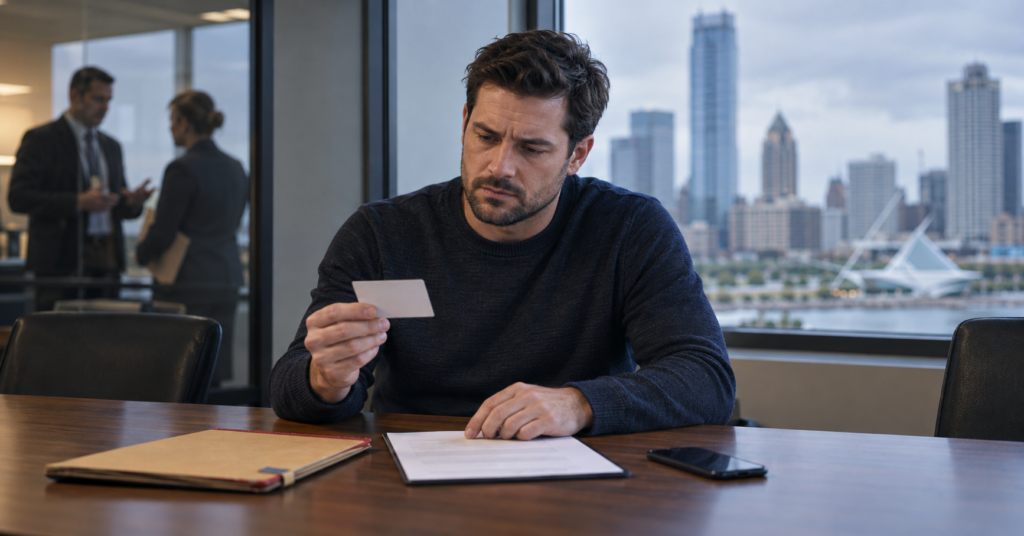
A detective may call, send a message, leave a business card or ask another person to tell the subject to make contact. The detective might describe the conversation as an opportunity to explain what happened.
A request for an interview is not the same as a court order. Before responding, the person should determine:
- Which agency is conducting the investigation
- The detective’s identity and contact information
- Whether the person is considered a witness or suspect
- What incident is being investigated
- Whether an arrest warrant exists
- Whether police are requesting documents or devices
- Whether a deadline has been provided
People should not lie to investigators, fabricate an explanation or ask another witness to change an account. They also should not assume that cooperating without advice will cause the matter to disappear.
A criminal defense lawyer can communicate with the detective, clarify the person’s status and advise whether an interview would be appropriate. Depending on the circumstances, counsel may attend an agreed interview or recommend that no statement be given.
Requests for Phones, Messages and Online Accounts
Many Milwaukee investigations involve digital evidence. Police may ask for consent to search a phone, obtain a search warrant or seize a device during an arrest.
A smartphone may contain far more than messages connected with the allegation. It can include photographs, location history, financial information, health records, private communications and access to cloud accounts.
Questions that may arise include:
- Whether the person voluntarily consented to a search
- What property the warrant authorizes police to examine
- Which dates, applications or data categories are relevant
- Whether the device belongs to the suspect or another person
- Whether deleted information can be recovered
- How investigators interpret incomplete conversations
- Whether someone else had access to the account or device
Deleting information after learning about an investigation can create additional concerns and may destroy evidence that would have supported the defense. The safer approach is generally to preserve the device and obtain legal advice before making decisions about access or disclosure.
Preserving Evidence Before Charges Are Filed
The government is not the only party that may need evidence. Material supporting the person’s account should be identified early and preserved lawfully.
Potential evidence may include:
- Complete text or email conversations
- Photographs and videos
- Receipts and transaction records
- Work schedules or time records
- Vehicle or building access logs
- Names and contact details of witnesses
- Medical records
- Location information
- Surveillance footage
- Social-media messages
- Documents showing ownership or permission
Context matters. A single screenshot can create a misleading impression when earlier or later messages are missing. Preserving an entire conversation in its original form may be more useful than selecting only favourable excerpts.
A factual timeline can also help. It should identify dates, locations, participants and available records without exaggeration or speculation. The timeline should not be posted publicly or distributed to potential witnesses.
Pre-Charge Contact With Prosecutors
After police complete a referral, the prosecutor may review reports, statements, recordings, photographs and other submitted evidence. The prosecutor may file the proposed charges, choose different charges, request more investigation or decline prosecution.
In an appropriate case, defense counsel may provide information that the initial referral does not contain. This could include documents establishing permission, communications supplying missing context or evidence showing that the suspect was elsewhere.
Whether contacting the prosecutor is advisable depends on the facts. An incomplete or poorly supported presentation could reveal the defense strategy or direct investigators toward evidence they had not considered. Counsel must evaluate what to disclose, when to disclose it and whether any presentation should occur at all.
Prosecutors remain responsible for their own charging decisions. Hiring counsel does not require them to accept the defense’s interpretation or decline a case.
Arrested but Still Not Charged
A delay between arrest and charging can result from several circumstances. Officers may be waiting for laboratory results, digital forensics, medical documentation, witness interviews or a prosecutor’s review.
The passage of time alone does not establish that the case has been rejected. It also does not mean charges are certain.
Someone in this position should preserve the release paperwork and determine whether it contains:
- A required court appearance
- A temporary restraining order
- A no-contact instruction
- A property-release procedure
- A bond condition
- An agency case number
A person should not ignore a written court date simply because no CCAP result appears during an online search. Court records can also contain errors or delays, and the controlling instructions may be found in the documents provided at release.
Employment and Reputation Concerns
A pending investigation can affect employment even before a public criminal case exists. This is especially true when the accusation concerns workplace conduct, professional licensing, driving responsibilities, financial access or contact with vulnerable individuals.
The person should review employment policies before making disclosures or signing an internal statement. A workplace investigation and a criminal investigation can proceed at the same time, and information provided in one setting may later become relevant in the other.
Public statements present similar risks. Posting an explanation on social media may expose inconsistencies, identify witnesses or preserve admissions that investigators can review. Contacting the accuser directly can also create allegations of intimidation or violate an existing no-contact restriction.
If Charges Are Filed
When a criminal complaint is filed, the case moves out of the pre-charge stage. The defendant may need to appear in Milwaukee County Circuit Court, address release conditions and obtain information about the formal allegations.
An initial appearance is not a trial. Under Wisconsin Statutes Section 970.01, the court addresses matters that can include informing the defendant of the complaint and rights, referral for legal representation and bail or release conditions.
The defense can then seek discovery and evaluate issues such as:
- Whether probable cause supported an arrest or warrant
- Whether statements were obtained lawfully
- Whether a search exceeded its legal scope
- Whether witnesses provided inconsistent accounts
- Whether digital evidence was properly attributed
- Whether the complaint establishes the alleged offense
- Whether potentially favourable evidence was preserved
Work performed before charging may remain valuable because it can preserve evidence and reduce the risk that important facts are lost while the case is developing.
When to Contact a Milwaukee Criminal Defense Lawyer
Consider contacting a Milwaukee criminal defense lawyer before speaking with police when you know an allegation has been reported, detectives request an interview, officers want access to a device or property, or you were arrested and released without a filed case.
Legal guidance may also be appropriate when:
- Police have contacted family members or coworkers
- A search warrant has been executed
- An employer is conducting a related investigation
- You believe surveillance footage may be overwritten
- A witness possesses information supporting your account
- You are concerned about professional licensing
- The allegation involves digital communications
- You do not understand your release paperwork
- A case appears on CCAP unexpectedly
Kim & LaVoy, S.C. is a Wisconsin criminal defense firm serving Milwaukee and surrounding counties. Its practice expressly includes pre-charging representation, along with defense involving drunk driving, drug offenses, domestic violence, theft, fraud, juvenile allegations, federal crimes and other misdemeanors and felonies.
Bring the detective’s contact information, police paperwork, relevant messages, available recordings and a factual timeline to a consultation. Avoid deleting data or contacting potential witnesses for the purpose of coordinating accounts.
Note: This article provides general information about Wisconsin criminal investigations, pre-charge representation and public court records. It is not legal advice and does not create an attorney-client relationship. Investigation procedures, charging decisions and record-access rules depend on the facts and applicable law.