Milwaukee plate-reader errors can become a serious concern when a camera record connects a vehicle to a criminal investigation. A disputed plate character, an outdated alert, or an unsupported assumption about the driver can lead investigators toward the wrong explanation.
A useful defense review follows each step from the original photograph to the conclusion police reached. The following checks explain where to look for discrepancies, which records may clarify them, and when to involve a Milwaukee criminal defense lawyer.
Understand What the Plate Reader Recorded
An automated license plate reader, or ALPR, photographs vehicles and uses optical character recognition to convert plate images into searchable text. Milwaukee Police Department’s published SOP 735 describes stored records that include the plate image, interpreted text, a contextual photograph, location information, and a date and time. It also distinguishes immediate alerts from later searches of stored records.
That distinction shapes the review. If an alert prompted a traffic stop, the important question is what the officer knew when the stop began. If detectives found the record days later, the focus may be how they selected that vehicle and connected its movements to an alleged offense.
Ask which type of record the prosecution actually relies on before treating every camera reference as the same kind of evidence.
Compare the Original Image With the Reported Plate
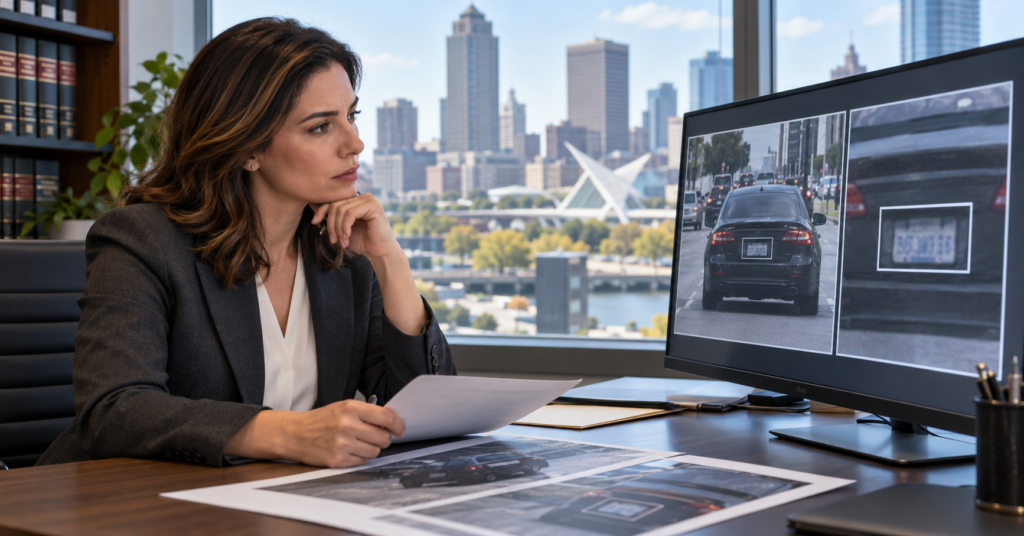
Start with the photograph underlying the match. Compare each visible character with the number entered in the police report, and check the issuing state and plate type where they are readable.
Then examine the surrounding vehicle. Body style, visible damage, roof equipment, decals, and other distinctive features may help determine whether the image depicts the vehicle investigators identified. Color alone deserves caution because lighting can affect its appearance.
For example, if a report identifies your sedan but the underlying photograph appears to show an SUV, that difference calls for an explanation. It does not establish why the mismatch happened.
Keep possible explanations separate. A transcription error, a mistaken registration lookup, and someone using another vehicle’s plate would require different supporting evidence. A defense argument should identify the actual discrepancy rather than assume a particular cause.
Check Why the Alert Was Active
A plate number can be read accurately while the information attached to it is disputed.
The published 2024 version of MPD SOP 735 requires members operating an ALPR-equipped vehicle to visually verify the plate and confirm its wanted status through the specified law enforcement databases after receiving an alert. The policy explains that the unit’s wanted-vehicle information is not updated in real time.
That makes the sequence worth checking: when was the underlying alert created, what did it concern, and what confirmation occurred before police acted?
If a stolen vehicle had already been recovered, for example, the relevant records would include the recovery report, the alert’s status history, and the officer’s confirmation results. This is a question to investigate, not a reason to assume every older alert is invalid.
Counsel should also identify the agency involved and obtain the policy version applicable on the incident date.
Test the Timeline Against the Actual Allegation
A camera sighting matters only in relation to the event prosecutors are trying to establish.
Compare the recorded capture time with the alleged offense time. If different systems supply different timestamps, determine whether they use the same time zone and whether the displayed time represents image capture, upload, or a later search. These are verification questions; a discrepancy should not be described as a clock error without supporting records.
Location needs similar care. A vehicle recorded near a business does not, by that fact alone, establish that it entered the business’s parking lot or stopped there.
For a case involving several sightings, examine the full sequence and the intervals between them. Independent video or transaction records may clarify what happened during a gap. An absence of camera records, however, should not automatically be treated as proof that a vehicle was somewhere else.
Examine the Evidence Identifying the Driver
Vehicle identification and driver identification require separate attention.
If several people had legitimate access to the car, the review should consider who possessed it at the relevant time. Rental paperwork, repair-shop records, employment schedules, or a documented sale may help explain possession. Their value depends on how specifically they address the date and time in question.
Registration can still support an investigative inference. In Kansas v. Glover, the U.S. Supreme Court upheld a stop after an officer learned that the registered owner’s license was revoked and had no information undermining the inference that the owner was driving. The Court emphasized the circumstances known to the officer.
That ruling concerns the justification for a stop. In a prosecution alleging that a particular person committed an offense, counsel should examine the additional evidence connecting that person to the vehicle and conduct at issue.
Request the Records Behind the Selected Screenshot
A screenshot reproduced in a report may leave important questions unanswered. A focused request can seek the underlying image, associated data, search details, and records explaining how investigators used the result.
Depending on the dispute, useful requests may include:
- The original plate and vehicle images associated with the cited capture.
- The alert entry, status history, and confirmation records.
- The query details and surrounding results relevant to the disputed identification.
- Dispatch communications, body-camera footage, or squad video documenting the stop.
- Information showing how the record was exported and incorporated into the case.
These are potential requests, not a guarantee that every item exists or must be disclosed.
Wisconsin Statutes section 971.23 governs criminal discovery. Upon demand, it requires specified disclosures within a reasonable time before trial when the material is within the state’s possession, custody, or control, including intended physical trial evidence and exculpatory evidence. The appropriate request depends on the material and procedural stage.
Preserve Independent Evidence Promptly
Evidence outside the police file may help resolve a disputed match.
Save original receipts, parking records, existing location records, repair invoices, and photographs showing the vehicle’s appearance around the relevant date. Identify businesses or residences that may have useful video and give that information to counsel promptly so preservation can be considered before recordings are overwritten.
Preserve complete files where possible. Keep an untouched original if you create an annotated copy to explain a discrepancy, and record where each item came from.
Write down your own recollection while it is fresh, distinguishing what you remember from what you later learned. Give counsel the names of potential witnesses without asking anyone to coordinate accounts. If a formal alibi defense is contemplated, Wisconsin law imposes notice requirements that counsel should address.
Identify What the Discrepancy Changes Legally
A defense lawyer should connect the identified problem to a specific legal question.
A challenge to the stop examines the information supporting police action at that time. An evidentiary objection may address whether a proposed exhibit has an adequate foundation. A trial argument may instead accept that a photograph is authentic while disputing the conclusion drawn from it.
Wisconsin Statutes section 909.01 requires sufficient evidence to support a finding that an exhibit is what its proponent claims. Authentication does not resolve every dispute about the meaning or weight of its contents.
These distinctions matter when assessing Milwaukee plate-reader errors. Finding a discrepancy starts the legal analysis; it does not establish that a charge must be dismissed. Counsel must evaluate the applicable rules and the remaining evidence.
When to Contact a Lawyer
Consider contacting a Milwaukee criminal defense lawyer when investigators ask about your vehicle’s location, request an interview about another driver, or cite a plate-reader record in connection with an arrest or charge.
An initial consultation is more useful when you bring the case number, any paperwork received, the relevant vehicle information, and a brief account of the disputed facts. Explain whether your concern involves the plate, vehicle, time, driver, or alert status.
If investigators contact you before a case is filed, our guide to Milwaukee pre-charge defense explains how early legal advice and evidence preservation can matter.
Legal Note: This article provides general information about Wisconsin criminal defense and is not legal advice. The significance of a plate-reader record depends on the evidence, applicable law, and circumstances of the individual case.