
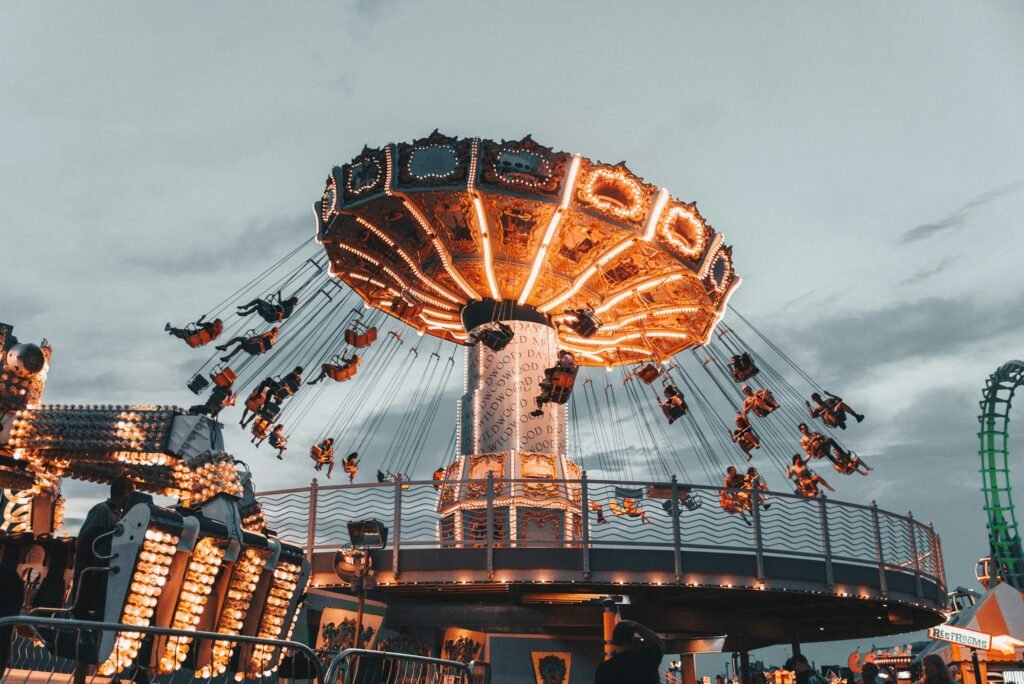
Amusement parks and waterparks are designed to create excitement, but visitors must depend on operators to inspect rides, maintain walking surfaces, enforce safety restrictions and respond appropriately when something goes wrong. A mechanical problem, poorly supervised attraction or slippery walkway can result in serious injuries within seconds.
British Columbia amusement park injuries may lead to a personal injury claim when an operator, property occupier, contractor, equipment supplier or another party fails to take reasonable safety precautions. However, an injury occurring at a recreational facility does not automatically establish negligence. The circumstances surrounding the attraction, warnings, staff conduct and visitor’s actions must all be examined.
Claims can become particularly complicated when the injured visitor signed a waiver, purchased tickets online or was a child at the time of the incident.
The Legal Duty Owed to Amusement Park Visitors
Most claims against amusement parks and waterparks in British Columbia begin with the province’s Occupiers Liability Act.
An occupier generally owes a duty to take reasonable care in all the circumstances to ensure that people entering and using the premises are reasonably safe. That duty applies to dangers resulting from:
- The condition of the property
- Activities conducted on the property
- The conduct of third parties on the property
An occupier is not necessarily limited to the company named on the entrance sign. The legislation recognizes that more than one party can qualify as an occupier of the same premises. A property owner, park operator or another business controlling a particular attraction could potentially have relevant responsibilities.
The legal question is not whether the park could have prevented every possible injury. It is whether the responsible party took reasonable precautions in light of the risk.
Injuries That May Support a Claim
Amusement parks and waterparks contain a combination of mechanical equipment, elevated structures, crowds, water and fast-moving attractions. Different accidents can therefore raise different liability issues.
Potential incidents include:
- A rider falling because a restraint failed
- A waterslide user colliding with another guest
- A wave-pool injury linked to inadequate supervision
- A child entering an attraction despite not meeting its safety requirements
- A patron slipping on an unreasonably hazardous surface
- A ride stopping abruptly because of poor maintenance
- An injury during loading or unloading
- A fall caused by a defective stair, handrail or platform
- An accident involving overcrowding or poor queue management
- A delayed response to a medical emergency
- An injury caused by another visitor’s dangerous conduct
- Food or beverage contamination within the facility
Some incidents may involve an inherent risk of the attraction. Others may result from a hazard that the operator could reasonably have identified and corrected.
That distinction can become central to a claim.
Establishing Negligence After an Injury
A visitor generally needs more than proof that an injury happened. A negligence claim normally requires evidence showing that the defendant owed a duty of care, failed to meet the applicable standard and caused a compensable injury.
For example, a person who experiences neck pain after an ordinary roller-coaster movement may have difficulty establishing negligence if the ride operated as intended and adequate warnings were provided. The analysis could be different if maintenance records show that staff knew about an abnormal braking problem and continued operating the ride.
Evidence may need to establish:
- What created the danger
- How long the condition existed
- Whether the operator knew or should have known about it
- Which precautions were available
- Whether warnings were adequate
- Whether employees followed operating procedures
- How the failure caused the injury
Reasonable safety measures vary according to the attraction. The precautions expected around a shallow splash area may differ from those required for a high-speed ride or deep wave pool.
Ride Maintenance and Mechanical Failures
Mechanical attractions require appropriate installation, inspection, maintenance and operation. When a restraint, control system or structural component allegedly failed, investigators may need to examine much more than the damaged part.
Relevant material can include:
- Inspection and maintenance logs
- Manufacturer instructions
- Previous repair records
- Employee reports
- Operator training documents
- Incident history
- Parts-replacement schedules
- Shutdown records
- Technical data generated by the ride
- Photographs and video of the attraction
- Communications concerning known defects
Responsibility may extend beyond the park operator. Depending on the evidence, a maintenance contractor, inspection provider, equipment supplier or manufacturer could become involved.
The British Columbia Occupiers Liability Act provides a specific rule concerning independent contractors. An occupier may have a defence to liability arising solely from a contractor’s negligence if the occupier used reasonable care when selecting and supervising the contractor and it was reasonable to have the contractor perform the work.
That makes contractor selection, qualifications and supervision important evidence rather than merely administrative details.
Waterpark Supervision and Lifeguard Response
Waterpark claims frequently involve supervision. Wave pools, lazy rivers, waterslides and children’s areas may require different staffing levels and emergency procedures.
A claim may examine whether:
- Lifeguards had an unobstructed view
- Staff were properly positioned
- The attraction was overcrowded
- Height, weight or age restrictions were enforced
- Riders were released at safe intervals
- Emergency equipment was available
- Employees responded promptly
- Staff received suitable training
- Water depth and current strength were clearly marked
- Facility procedures were followed
A drowning or near-drowning case may require detailed reconstruction of the timeline. Surveillance footage, lifeguard rotation records and emergency communications can help establish how long the person was in distress before staff intervened.
The fact that lifeguards were present does not by itself prove that supervision was reasonable. At the same time, an unsuccessful rescue does not automatically establish negligence. The response must be evaluated in the context of the conditions confronting staff.
Slips and Falls Around Pools and Attractions
Visitors expect surfaces near pools and water rides to become wet. That expectation does not necessarily excuse every slipping hazard.
The issue is usually whether the condition created an unreasonable danger and whether the occupier took reasonable steps to address it. Factors may include:
- The type of flooring
- Drainage and water accumulation
- Surface wear
- Cleaning procedures
- Lighting
- Handrails
- Placement of warning signs
- Inspection frequency
- Whether employees knew about the hazard
- Whether suitable footwear rules were communicated
A small amount of water beside a pool may be an ordinary feature of the setting. A concealed drop, broken drain, accumulated substance or unusually slippery surface could present a different situation.
Photographs taken immediately after the fall can be particularly valuable because water may be removed, warning signs may be moved and damaged flooring may later be repaired.
Crowd Control and the Conduct of Other Visitors
An injury may be caused directly by another guest rather than by park equipment. Examples include a patron pushing someone into a pool, ignoring slide instructions or behaving aggressively in a crowded queue.
Under the Occupiers Liability Act, an occupier’s duty can apply to the conduct of third parties on the premises. This does not make an operator automatically liable for every unpredictable act committed by a visitor.
The issue may be whether the conduct was reasonably foreseeable and whether staff had a fair opportunity to respond. Previous complaints, visible intoxication, repeated rule violations or overcrowding may become relevant.
The individual who caused the injury could also bear responsibility. A claim can involve more than one defendant when separate actions contributed to the same incident.
Injury Waivers and Ticket Terms
Amusement parks and waterparks may include liability terms in online checkout pages, membership agreements, season passes or attraction-specific waivers. Signs at the entrance or beside a ride may also describe risks and attempt to restrict liability.
A waiver does not automatically defeat every claim.
Section 4 of the British Columbia Occupiers Liability Act permits an occupier, where otherwise allowed by law, to extend, restrict, modify or exclude its duty through an express agreement, stipulation or notice. The occupier must take reasonable steps to bring that term to the visitor’s attention.
A waiver dispute may involve questions such as:
- Whether the visitor saw the term before purchasing admission
- How prominently it was displayed
- Whether the wording covered the particular accident
- Whether the visitor had an opportunity to read it
- Whether an online checkbox clearly communicated legal consent
- Whether the term addressed negligence
- Whether the attraction involved conduct beyond the risks described
- Whether enforcing the provision would be legally permissible
A warning that a waterslide involves speed and sudden movement may help establish that the visitor accepted those ordinary risks. It may not necessarily protect an operator from every allegation of defective equipment or negligent maintenance.
The exact language and presentation of the waiver require careful review.
Claims Involving Injured Children
Children are frequent visitors to amusement parks and waterparks, making child injury claims especially important in this area.
An operator may need to account for the fact that children do not always recognize hazards or follow instructions in the same way as adults. Reasonable precautions may include effective supervision, understandable warnings, securely controlled access and consistent enforcement of height or age restrictions.
Waiver issues can also be different when a parent purchased the ticket or signed on behalf of a child. Under British Columbia’s Infants Act, contracts entered into by a person under 19 are generally unenforceable against that person unless a statutory exception or another specified circumstance applies.
A parent’s signature should not automatically be assumed to eliminate a child’s personal injury rights. The enforceability and scope of any agreement must be assessed under British Columbia law.
Claims involving children may also require special procedures for approving and managing settlements. Parents should obtain legal advice before accepting a settlement or signing a release affecting a child.
Injuries Caused by Accepted Recreational Risks
Some level of risk is inherent in many amusement attractions. A roller coaster may involve speed, sudden direction changes and forces on the body. A waterslide may involve rapid movement, splashing and entry into a pool.
British Columbia’s Occupiers Liability Act recognizes that the duty owed can be restricted when a person willingly assumes a risk. However, participating in an attraction does not necessarily mean accepting every possible danger.
A rider may accept the ordinary motion of a properly functioning ride without accepting a hidden mechanical defect. A waterpark guest may accept becoming wet without accepting a poorly maintained platform or staff releasing riders at unsafe intervals.
The claim may depend on defining the risk precisely. Describing the danger as broadly as “the risks of a waterpark” can obscure whether the visitor actually understood and accepted the specific hazard that caused the injury.
Shared Responsibility Under British Columbia Law
An injured visitor’s own conduct may affect compensation.
British Columbia’s Negligence Act allows responsibility to be divided when the fault of more than one person contributed to the loss. A visitor could be found partly responsible for ignoring a visible warning, entering a prohibited area or deliberately failing to follow an operator’s instructions.
Shared fault does not necessarily eliminate the claim. Compensation may instead be reduced according to the claimant’s assigned portion of responsibility.
A facility should not assume that a rule violation removes all operator liability. If employees regularly permitted the conduct, warnings were unclear or the attraction’s design made compliance difficult, the complete circumstances may need to be examined.
Evidence to Preserve After the Incident
Evidence at a recreational facility can change or disappear quickly. Temporary hazards may be cleaned, equipment may be repaired and surveillance recordings may be overwritten.
An injured visitor or parent should consider preserving:
- Photographs and videos of the attraction
- The exact location of the accident
- Admission tickets and electronic receipts
- Copies or screenshots of waiver language
- Wristbands and attraction passes
- Names and contact information of witnesses
- The clothing and footwear worn
- Incident reports
- Staff names or descriptions
- Medical and ambulance records
- Communications with the operator
- Photographs of visible injuries
- Records of missed work or school
- Receipts for injury-related expenses
A person should not enter a restricted area or interfere with equipment to gather evidence. Photographs should be taken only when doing so is safe and permitted.
The operator should be notified, but an injured visitor should avoid speculating about fault or minimizing symptoms in a written statement. An accurate factual account is more useful than a rushed conclusion about what happened.
Surveillance Footage and Incident Reports
Amusement parks may operate cameras around entrances, queues, loading platforms, pools and major attractions. Video could show the hazard, staff response, crowd levels or how the incident occurred.
That footage may be retained for only a limited period. A prompt preservation request can identify the relevant time, attraction and camera locations before recordings are routinely overwritten.
An internal incident report can also provide useful information, but visitors may not automatically receive a copy at the scene. The injured person should separately record what was reported, who received the report and when it was made.
Witness information is equally important. Park employees may change positions, seasonal staff may leave and other visitors can be difficult to locate once everyone departs.
Medical Documentation and Delayed Symptoms
Serious injuries are not always immediately apparent. Adrenaline and the excitement of the environment may temporarily mask pain. Head injuries, soft-tissue damage and psychological symptoms can develop or become clearer after the visitor leaves the park.
Medical records can connect the symptoms to the incident and document how the condition develops. The injured person should describe the mechanism of injury accurately, including the attraction involved and the body movements experienced.
Possible injuries include:
- Concussion and traumatic brain injury
- Spinal cord damage
- Neck and back injuries
- Fractures
- Shoulder and knee injuries
- Cuts and scarring
- Dental injuries
- Near-drowning complications
- Psychological trauma
- Aggravation of a pre-existing condition
A prior medical condition does not necessarily prevent recovery when an incident causes a new injury or worsens existing symptoms. TCL’s guide to a personal injury claim involving a pre-existing condition explains why earlier and current medical records may become important.
Compensation Available in a Successful Claim
Compensation depends on the injury, its effect on the person’s life and the available evidence. A successful British Columbia injury claim may include damages for:
- Pain and suffering
- Past income loss
- Reduced future earning capacity
- Treatment and rehabilitation expenses
- Future care
- Necessary household assistance
- Out-of-pocket expenses
- Loss of housekeeping capacity
Non-pecuniary damages address consequences that cannot be measured through an invoice, including physical discomfort and loss of enjoyment of life. More information is available in TCL’s guide to pain and suffering in a personal injury claim.
The value of a claim cannot be determined from the type of accident alone. A brief recovery from a minor injury will be assessed differently from a permanent neurological injury, serious scarring or long-term loss of mobility.
British Columbia’s Limitation Period
Under British Columbia’s Limitation Act, the basic limitation period generally requires a court proceeding to be commenced within two years after the claim is discovered.
Discovery involves more than simply knowing that an incident occurred. The legislation considers when the claimant knew or reasonably should have known that injury, loss or damage occurred, that it was caused or contributed to by an act or omission, that the potential defendant was responsible for that act or omission and that a court proceeding would be an appropriate way to seek a remedy.
Special discovery provisions apply to minors. A minor’s claim is generally discovered on the later of the date the person turns 19 and the date determined under the ordinary discovery rules, unless a valid notice to proceed changes that timing.
These rules should not be treated as a reason to delay. Evidence may be lost long before the legal deadline expires, and other notice requirements or contractual issues may apply in a particular case.
Identifying the Responsible Parties
The company that sold the ticket may not be the only potential defendant. An amusement park injury can involve separate entities responsible for ownership, operation, maintenance, inspection, security or equipment.
Potential parties may include:
- The park or waterpark operator
- The property owner
- A ride operator
- A maintenance contractor
- An equipment manufacturer or supplier
- A security provider
- A food-service operator
- Another visitor
The appropriate defendants depend on what caused the incident and who controlled the relevant activity or property. Business records, contracts and inspection documents may be necessary to identify each party’s role.
Determining responsibility early can also help ensure that the correct insurers receive notice and that evidence-preservation requests reach the entities controlling the relevant records.
Legal Note: This article provides general information about British Columbia amusement park injuries, waterpark accidents and occupiers’ liability. It does not provide legal advice, predict the value of a claim or create an attorney-client relationship. Liability, waiver enforceability and limitation periods depend on the specific facts and applicable law. An injured person or the parent of an injured child should consult a qualified British Columbia personal injury lawyer about the incident.