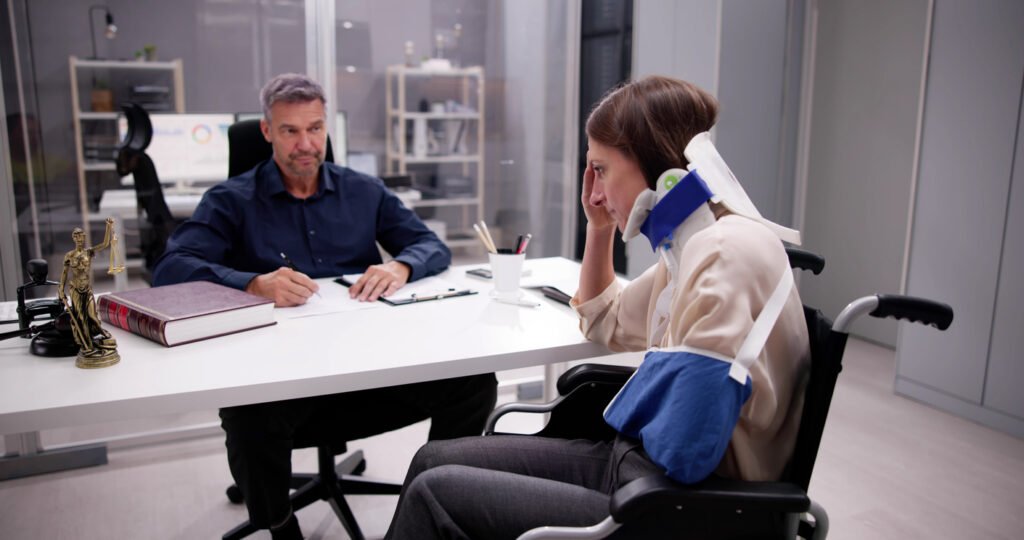
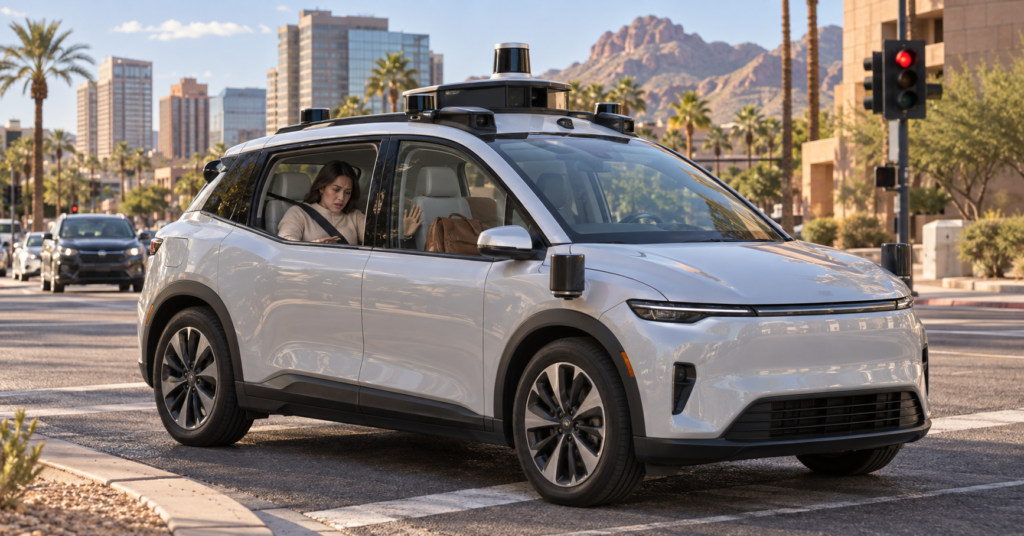
Phoenix robotaxi injury claims may arise when an autonomous vehicle brakes abruptly and throws a passenger against a seat, door, partition or interior fixture. A claim does not necessarily require a collision with another vehicle. The central questions are whether the stop was unreasonably dangerous, what caused it and whether the passenger can connect the movement to a documented injury.
These cases can be more complicated than ordinary car-accident claims. There may be no human driver to interview, and important evidence may be stored in vehicle sensors, internal software logs and remote-support records controlled by the robotaxi operator.
A Collision Is Not Required for an Injury Claim
Some passengers assume they cannot pursue compensation unless the robotaxi struck another vehicle or object. Arizona personal injury law does not generally make physical contact between vehicles an absolute requirement.
A passenger could be injured when a vehicle:
- Brakes sharply for an obstacle.
- Stops in response to inaccurate sensor information.
- Makes an abrupt evasive maneuver.
- Accelerates before the passenger is securely seated.
- Opens or closes a door unexpectedly.
- Stops in an unsafe traffic location.
- Responds unpredictably to construction or emergency vehicles.
The absence of exterior damage can make the injury harder to demonstrate, but it does not prove that no harmful event occurred. Medical records, trip data, interior video and passenger communications may help establish the force and timing of the incident.
A Sudden Stop Does Not Automatically Establish Negligence
An unexpected stop may feel unsafe without being legally negligent. A robotaxi may brake suddenly to avoid a pedestrian, cyclist, red-light runner or vehicle entering its lane. In that situation, stopping sharply may have prevented a more serious crash.
A viable claim generally requires evidence that someone responsible for designing, maintaining or operating the vehicle failed to use legally required care. The investigation may examine whether:
- The vehicle detected the hazard accurately.
- Its response was proportionate to the danger.
- The braking system functioned correctly.
- A known software problem affected the trip.
- Maintenance was completed as required.
- Remote personnel intervened appropriately.
- The passenger received necessary safety instructions.
- The vehicle continued operating despite a reported defect.
The result depends on why the vehicle stopped—not merely on the fact that the stop was uncomfortable or forceful.
Arizona Rules for Fully Autonomous Vehicles
Arizona law permits qualifying fully autonomous vehicles to operate on public roads when statutory requirements are satisfied. The relevant provisions begin in Title 28, Chapter 29 of the Arizona Revised Statutes.
These rules address matters such as registration, financial responsibility, compliance with traffic laws and the vehicle’s ability to reach a minimal-risk condition if the automated driving system cannot continue a trip safely.
Regulatory authorization does not give an operator immunity from an injury claim. It also does not establish liability every time a passenger is hurt. Compliance with autonomous-vehicle regulations is one part of the investigation, while negligence and causation must still be evaluated using the facts of the incident.
The National Highway Traffic Safety Administration also provides federal information about automated-driving technologies and vehicle safety oversight.
Who May Be Responsible for a Robotaxi Injury?
A robotaxi incident may involve several businesses or individuals. Responsibility should be based on evidence rather than an assumption that one company controls every part of the vehicle.
| Potential party | Issue that may require investigation |
|---|---|
| Robotaxi operator | Fleet monitoring, passenger safety, trip management and response to earlier complaints |
| Vehicle manufacturer | Mechanical components, occupant protection and manufacturing defects |
| Automated-driving developer | Perception, decision-making or braking-system performance |
| Maintenance contractor | Inspection, calibration, brake maintenance or incomplete repairs |
| Component manufacturer | A defective sensor, restraint, seat, door or braking component |
| Another road user | Conduct that forced the robotaxi to brake or change direction |
| Property owner or contractor | A dangerous obstruction, work zone or private-road condition |
The operator, vehicle manufacturer and software developer may be related companies, but they can also be separate entities with different responsibilities. Contracts and corporate relationships may help determine who controlled the system connected to the incident.
Vehicle Data Can Be Critical Evidence
Traditional car-accident evidence often includes skid marks, witness statements and photographs of vehicle damage. A robotaxi may produce additional electronic information capable of showing what happened immediately before and after the stop.
Relevant evidence could include:
- Vehicle speed and braking data.
- Sensor detections and object classifications.
- Camera recordings.
- Route and location information.
- Diagnostic and fault codes.
- Remote-assistance communications.
- Maintenance and calibration histories.
- Reports from earlier passengers.
- Software-version and update records.
- Records showing whether a safety operator intervened.
- The passenger’s trip receipt and application messages.
Not all recorded data will necessarily be available to an injured passenger. Some information may be proprietary, overwritten routinely or held by separate companies. A preservation letter can notify the appropriate parties that relevant material should not be destroyed while a claim is being investigated.
The passenger should preserve their own trip information immediately. Screenshots should show the pickup point, route, vehicle identification, time, receipt and any safety report submitted through the application.
Interior Video May Not Tell the Entire Story
An interior recording may show a passenger moving during the sudden stop, but it may not reveal why the automated system applied the brakes. Exterior cameras and sensor logs may be necessary to determine whether a real hazard existed.
Video also needs context. A short clip may not show that the passenger had just entered the vehicle, was attempting to use a seat belt or had been instructed to move. Time stamps should be compared with braking data, emergency calls and medical records.
When no video exists, the claim may still be supported by:
- Statements from other passengers.
- Immediate messages sent after the incident.
- Photographs of the vehicle’s interior.
- Records of a call to the operator.
- Nearby surveillance or traffic-camera footage.
- Medical documentation created shortly after the ride.
Reporting the event promptly can help create a contemporaneous record, particularly when the vehicle did not collide with anything and police were not called.
Medical Causation in a No-Collision Incident
A passenger must ordinarily connect the claimed injury to the sudden stop. This can become a disputed issue when there is no visible vehicle damage or when symptoms did not become severe until later.
Possible injuries include:
- Concussion or other head trauma.
- Neck or back strain.
- Shoulder and knee injuries.
- Bruising from contact with the interior.
- Aggravation of an existing spinal condition.
- Injuries caused by a fall while entering or leaving.
- Psychological symptoms following a frightening event.
Prompt medical assessment can document the symptoms, their reported onset and the treatment recommended. A passenger should accurately describe how their body moved, where it struck the interior and whether they were seated or using a restraint.
A delay in seeking treatment does not automatically defeat a claim. However, it can create questions about whether another event or pre-existing condition caused the symptoms. Following medical instructions and retaining appointment records can make the treatment history easier to evaluate.
Seat Belts and Passenger Conduct
The operator may examine whether the passenger was seated properly, followed safety instructions or used an available seat belt. Passenger conduct can affect a claim, but it does not necessarily eliminate the operator’s responsibility.
Arizona follows a pure comparative-negligence system. Under A.R.S. § 12-2505, damages may be reduced according to the claimant’s percentage of fault rather than automatically barred by a finding of partial responsibility.
The facts may include:
- Whether the seat belt was accessible and working.
- Whether the ride began before the passenger was ready.
- What safety instructions were provided.
- Whether the passenger was required to move during the trip.
- Whether a disability affected restraint use.
- Whether the braking force would have caused injury despite proper seating.
Arizona also limits the use of seat-belt nonuse as evidence in certain circumstances. The specific facts and applicable law should be reviewed before assuming that an unrestrained passenger cannot recover compensation.
Insurance Issues in Phoenix Robotaxi Injury Claims
Insurance coverage may depend on how the vehicle was registered, which entity operated the network and what caused the event. An injured passenger should not assume that an ordinary personal auto policy is the only available source of compensation.
Potential coverage could include:
- Commercial vehicle liability insurance.
- Coverage maintained by the robotaxi-network operator.
- Product-liability coverage.
- Insurance held by another at-fault motorist.
- Medical-payments coverage.
- The passenger’s applicable uninsured or underinsured motorist coverage.
Coverage does not resolve liability by itself. An insurer may accept that an event occurred while disputing whether the braking was negligent, whether the claimant was injured or whether all treatment was reasonable and necessary.
A passenger should avoid signing a broad release before understanding the diagnosis, future treatment needs and every party the agreement would discharge. A settlement with one entity could affect claims against others, depending on its wording.
When Another Driver Causes the Sudden Stop
The automated system may have responded correctly to a dangerous maneuver by another road user. Examples include a driver cutting across the robotaxi’s lane, a cyclist entering against a signal or a vehicle exiting a parking space without warning.
In that situation, the other road user may bear some or most of the responsibility. The robotaxi operator could still remain relevant if the vehicle’s reaction was delayed or unnecessarily severe.
Arizona generally assigns each defendant responsibility based on their percentage of fault under A.R.S. § 12-2506. Identifying every contributing party therefore matters. Focusing only on the robotaxi company could overlook the driver whose conduct created the emergency.
Exterior video, plate-recognition data and witness information may be especially important if the other vehicle left without stopping.
Damages That May Be Considered
Compensation depends on the injury and its consequences rather than on the novelty of the technology. Recoverable losses may include:
- Emergency and follow-up medical expenses.
- Rehabilitation or therapy costs.
- Lost wages.
- Reduced future earning capacity.
- Physical pain and limitations.
- Emotional distress associated with the injury.
- Necessary future medical care.
- Damaged personal property.
The value of a claim cannot be determined solely from the type of incident. A brief stop producing temporary soreness is different from a sudden maneuver resulting in surgery, extended time away from work or lasting impairment.
Medical bills, income records, photographs and treatment notes can help document the claimed losses. A personal journal may also record functional limitations, but it should remain accurate and avoid exaggeration.
Filing Deadlines Under Arizona Law
Arizona generally applies a two-year limitation period to many personal injury claims under A.R.S. § 12-542. The applicable deadline can change based on the legal theory, the claimant’s circumstances and the parties involved.
A much shorter process may apply if the claim includes a public entity or public employee. Arizona’s notice-of-claim law can require a qualifying notice within 180 days, and a separate one-year limitation may apply to certain public-entity actions. This issue could arise if a dangerous public-road condition contributed to the incident.
Waiting until the ordinary two-year period is nearly over can also allow electronic evidence to disappear. Vehicle logs, surveillance footage and application records may be retained for much shorter periods.
Steps to Take After a Phoenix Robotaxi Incident
A passenger should prioritize medical safety and report serious symptoms promptly. If possible, the passenger can also preserve basic information before leaving the vehicle or closing the transportation application.
Useful steps include:
- Photographing the vehicle and its identification number.
- Recording the exact location and direction of travel.
- Saving the trip receipt and route.
- Reporting the incident through the application.
- Requesting a copy of the incident report.
- Identifying other passengers or witnesses.
- Photographing visible injuries.
- Retaining damaged personal items.
- Avoiding edits to original photographs and videos.
- Keeping medical and employment records related to the injury.
A clear factual description is more useful than speculation about software. The passenger can describe the vehicle’s movement and the resulting injury without attempting to determine immediately which technical system failed.
When to Contact a Phoenix Personal Injury Lawyer
Legal advice may be useful when the injury requires continuing treatment, the operator denies that an incident occurred or important vehicle information is unavailable.
A lawyer may be able to help when:
- The operator will not identify its insurer.
- The vehicle made no physical contact with another object.
- Multiple companies controlled different systems.
- Another driver caused the emergency maneuver.
- The passenger had a pre-existing medical condition.
- Electronic evidence may be overwritten.
- A child or person with a disability was injured.
- The insurer requests a recorded statement.
- A settlement release includes several entities.
- A government road condition may have contributed.
An attorney can investigate the parties, send preservation notices, review insurance coverage and assess whether technical evidence requires an expert. Early involvement can be particularly important when the proof is held by companies rather than the passenger.
Readers can find additional information about accident liability and insurance disputes in TCL’s Personal Injury guides.
Note: This article provides general information about Arizona personal injury law and autonomous-vehicle incidents. It is not legal advice and does not create an attorney-client relationship. Liability, insurance coverage and filing deadlines depend on the circumstances of the trip and the parties involved. Anyone injured in a Phoenix robotaxi should obtain advice from a qualified Arizona attorney about their specific situation.