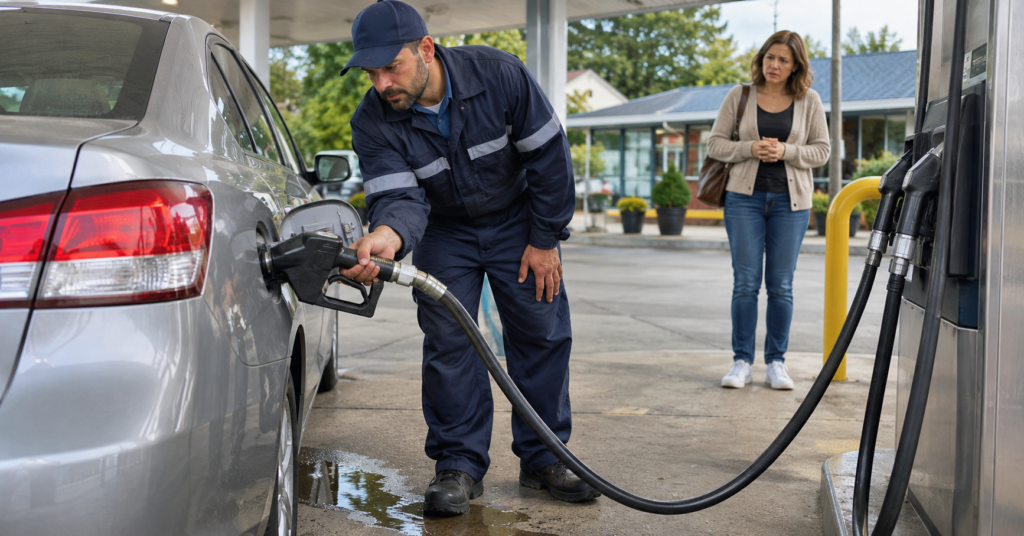
A routine fuel stop can become an injury incident when gasoline spills onto a customer, reaches their eyes, or leaves a slippery area beside the vehicle. In New Jersey, where attendants dispense gasoline, customers may assume that someone is watching the equipment and ready to stop an overflow.
New Jersey gas pump injuries require a closer investigation than simply asking whether the pump “shut off.” The nozzle, the attendant’s actions, and the station’s emergency controls raise different questions. Understanding the sequence helps explain both how the exposure happened and whether a preventable delay made it worse.
Put Medical Care Before Documentation
Gasoline can irritate skin and eyes, and prolonged skin contact can cause chemical burns. Move away from the spill, alert the attendant, and call 911 for a fire, breathing difficulty, or another serious emergency.
For gasoline on the skin, remove contaminated clothing and wash with soap and water. For an eye splash, immediately rinse with plenty of water for at least 15 minutes. Contact Poison Control at 1-800-222-1222 for exposure guidance; persistent eye pain or irritation needs medical evaluation. Do not delay rinsing to take photographs. Poison Control’s gasoline guidance explains the relevant exposure risks.
Avoid handling the nozzle or returning to the spill to recreate what happened. Once you are safe, someone accompanying you can help record basic details.
What New Jersey Requires From Gas Stations
New Jersey’s Retail Gasoline Dispensing Safety Act and regulations restrict gasoline dispensing to attendants. Required preparation includes instructions, at least one full working day of supervised practical experience, and a demonstration of understanding. Stations must keep the required attendant certificates available for inspection.
The law also requires a clearly identified, easily accessible switch or circuit breaker, located away from the dispensing pumps, that cuts power to all pumps during an emergency.
These requirements make training records and emergency procedures relevant when investigating an injury. They do not establish that every spill resulted from a violation.
Separate the Nozzle Shutoff From the Emergency Cutoff
An automatic nozzle’s shutoff operates at the point where fuel enters the vehicle. The station’s emergency cutoff controls electrical power to the dispensing equipment. They serve different functions, so an account that “the shutoff failed” needs clarification.
Investigators should establish which device was involved, whether anyone tried to activate it, and what happened afterward. Federal workplace safety rules also distinguish delivery nozzle valves from the separate emergency power cutoff. Those rules provide useful equipment context; they do not, by themselves, decide a customer’s injury claim.
A customer may observe continued spilling without knowing whether fuel was still being dispensed or liquid already released was draining from another surface. That distinction can affect an expert’s reconstruction.
Photographs, witness accounts, equipment specifications, and qualified inspection can help resolve the mechanism. A spill alone does not identify a defective component.
Reconstruct the Moments Before the Splash
A useful account follows the events in order. Record what you personally saw and heard, keeping observations separate from explanations offered afterward.
Questions worth addressing include:
- Did fuel appear around the filler opening, along the hose, or somewhere else?
- Did the attendant restart dispensing after an initial stop?
- Was the nozzle being removed when the splash occurred?
- Where were you standing or sitting when gasoline reached you?
- Did anyone report the overflow before the injury?
- What did the attendant do after receiving that warning?
The timing matters. If the initial splash caused an eye injury immediately, a later delay may have a different significance than a prolonged spill that continued soaking clothing. Write down approximate times without presenting an estimate as an exact measurement.
Identify the Exact Pump and Transaction
A street address identifies the station, but it may not identify the equipment involved. Record the pump number, the side of the island, the fuel grade, and the approximate transaction time.
Save the receipt, card transaction, and any incident number. A card statement can help establish a visit, but it may lack the detail needed to locate the correct camera recording or maintenance history.
Where safely available, photograph the pump’s visible identification and the surrounding layout. Do not open equipment panels or collect station components.
Also note the business name shown on the receipt. The fuel brand on the canopy may differ from the entity operating the station, and that distinction needs checking before a claim is directed to a particular company.
Preserve Records Before the Equipment Changes
A station may clean the spill, replace a nozzle, or call a service technician shortly after an incident. Those actions can change what remains available for inspection.
A lawyer can send a preservation request identifying the incident and relevant materials, including:
- Camera recordings covering the vehicle, pump island, and attendant’s movements.
- Transaction records sufficient to match the sale to the dispenser.
- Inspection, maintenance, repair, and replacement records for the equipment.
- Earlier complaints involving leaks, overflow, or dispensing problems.
- The attendant’s training documentation and applicable emergency procedures.
- Incident reports and photographs created by station personnel.
A preservation request does not automatically provide access to private records. Inspection arrangements or formal legal procedures may be necessary.
Keep your original photographs and videos, including files taken before and after the most obvious moment. Our guide to evidence that helps support a personal injury case explains how different records can work together.
Connect the Safety Failure to the Injury
The investigation should identify who controlled the relevant activity. Depending on the facts, that could involve the station operator, an employee’s conduct, a maintenance contractor’s work, or an alleged equipment defect. Each potential claim needs evidence supporting that party’s responsibility.
For a negligence claim, proving an unsafe act is only part of the case. The claimant must also connect it to the injury. New Jersey’s model jury instruction on proximate cause addresses that required relationship.
For example, a poorly marked emergency switch may warrant investigation, but its connection to an injury depends on whether it affected the response and resulting harm.
Likewise, a safety violation does not automatically establish entitlement to compensation. New Jersey’s model instructions recognize that statutory or regulatory violations can serve as evidence of negligence, with their legal effect depending on the applicable rule and circumstances.
Document the Physical and Financial Effects
Tell the treating clinician how the exposure happened, which body areas were affected, when symptoms began, and what first aid you received. Include relevant existing conditions so the medical record reflects an accurate history.
Maintain a simple record of treatment, prescriptions, missed work, and continuing limitations. A statement such as “could not tolerate outdoor light for two days” is more useful than repeatedly describing the injury as severe.
Medical bills also need a connection to the incident. New Jersey’s non-auto medical-expense instruction addresses reasonable expenses for necessary care of injuries caused by the defendant’s wrongdoing. A bill’s existence alone does not resolve those questions.
Check Deadlines and Any Allegation of Shared Fault
New Jersey generally requires a personal injury lawsuit to be filed within two years after the claim accrues, subject to exceptions. Reporting an incident to the station or negotiating with an insurer should not be treated as a substitute for meeting the filing deadline.
An insurer may also question the customer’s conduct. Under New Jersey’s comparative-negligence statute, recoverable damages are reduced by the claimant’s percentage of fault. Recovery is barred when that fault is greater than the combined negligence of the defendants against whom recovery is sought. An accusation of fault still needs factual support.
When to Contact a Lawyer
Consider speaking with a New Jersey personal injury lawyer when an exposure requires ongoing treatment, the station disputes what happened, equipment has been replaced, or responsibility is being passed between different businesses.
Bring your receipt, photographs, medical records, witness contacts, and correspondence. Explain whether the station offered reimbursement for damaged clothing or vehicle cleaning, and provide any proposed release before signing it.
A lawyer can assess the available evidence, identify the appropriate parties, arrange any necessary expert review, and explain the applicable deadlines. Early advice is especially useful when the physical equipment and video records may soon become harder to obtain.
Note: This article provides general information, not legal or medical advice. New Jersey gas pump injury claims depend on the facts and applicable law. Seek prompt medical care for an exposure and consult a qualified attorney about your circumstances.